A breeder once showed me two Staffordshire Bull Terriers standing side by side. One was a rich brindle with dramatic tiger stripes across a fawn base. The other was a clean fawn with a dark mask. "Same parents, same litter," she said. "How is that even possible?" The answer lies in two loci that work together like a lock and key: the A locus and the K locus.
Pattern inheritance confuses more breeders than almost any other topic in color genetics. Not because the individual pieces are difficult, but because two genes collaborate to produce the final result. Once you see how that collaboration works, pattern predictions become remarkably straightforward.
The Two-Gene System: A and K
If you have read my guide to the A, B, C, D, E loci, you know that the A locus controls pattern distribution. But here is what that article could not cover in full detail: the A locus only gets to express itself when the K locus allows it.
Think of it this way. The A locus is a painter with a full set of pattern templates: sable, wild sable, tan points, recessive black. The painter is ready to work. But the K locus is the building manager who decides whether the painter gets access to the room.
Three alleles at K determine what happens:
- KB - Dominant black. The building manager locks the door. The A locus painter never gets in. The dog is solid black (or solid liver, if the B locus says so).
- kbr - Brindle. The manager lets the painter in but adds brindle striping over the pattern.
- ky - Full access. The A locus pattern expresses cleanly without modification.
The dominance hierarchy is KB over kbr over ky. One copy of KB is enough to produce solid color, regardless of what the A locus holds.
The Lightbulb Moment
I teach a workshop where I ask students to predict the pattern of a dog that is KB/ky at K and Ay/at at A. Most students say "sable" because they remember that sable is dominant at A. But the answer is solid black. KB overrides everything at A. It does not matter what pattern the A locus holds. That pattern is locked away, invisible, potentially passed to offspring but never seen on this dog.
The A Locus Patterns: What Each One Looks Like
When the K locus does allow the A locus to express (when the dog is ky/ky or carries brindle), the A locus determines the pattern. There are four major alleles, arranged in a dominance series:
Sable/Fawn (Ay)
Sable is the most dominant A locus pattern. Dogs with at least one copy of Ay display a yellow, fawn, or red base coat with variable amounts of dark-tipped hairs. The range of expression is enormous. Some sables look nearly clear fawn with just a few dark hairs. Others are heavily shaded, appearing almost dark.
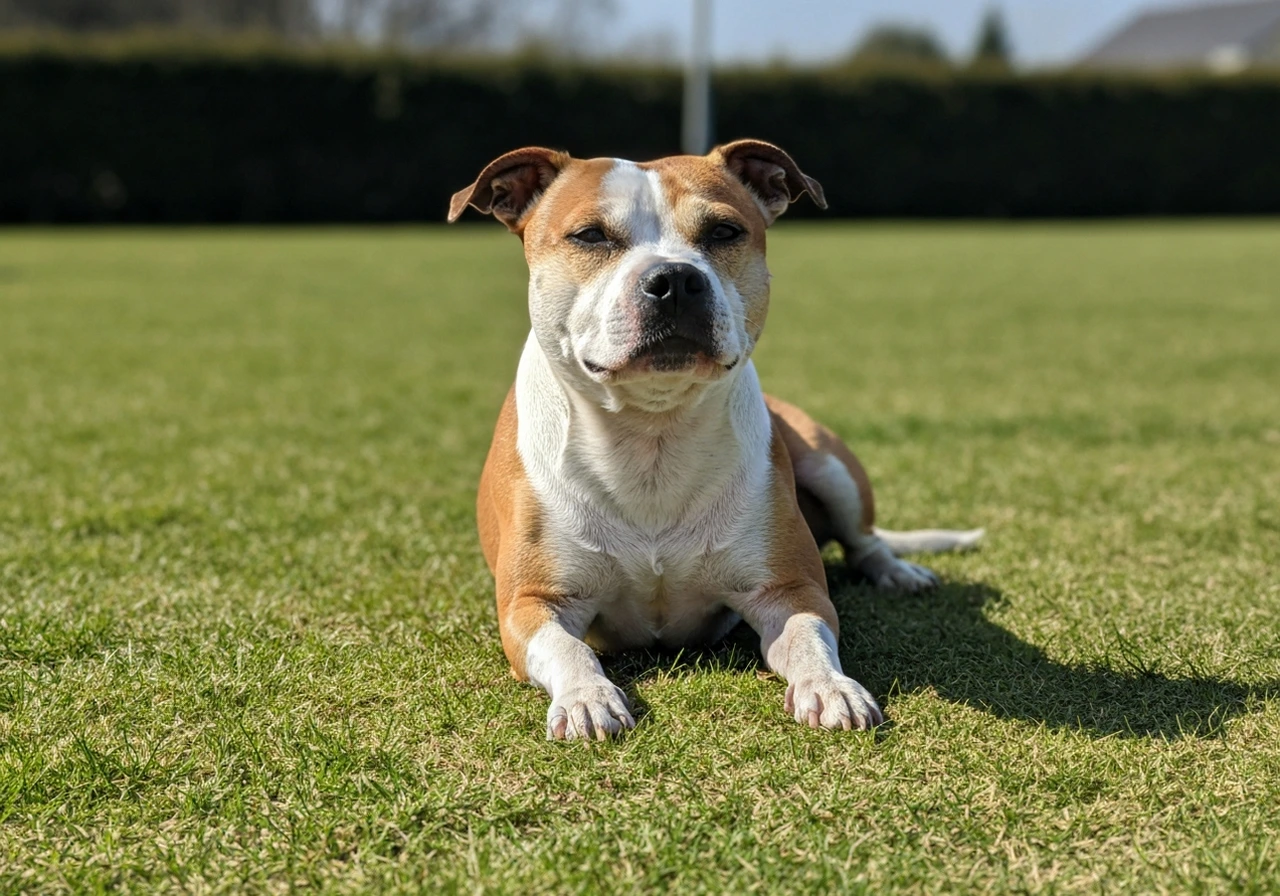
This variability within sable sometimes fools breeders. I have seen sable dogs registered as fawn, red, and even "golden," when genetically they are all the same pattern expressed to different degrees.
Wild Sable/Agouti (aw)
Wild sable creates the classic wolf-grey appearance. Each individual hair is banded with alternating dark and light pigment. This is the ancestral pattern, the one wolves carry. In domestic dogs, it appears in breeds like the Norwegian Elkhound, Keeshond, and some German Shepherd lines.
The banding effect means these dogs look distinctly different from clear sables. Where a sable dog has dark tips on light hairs, a wild sable dog has multiple bands of dark and light along the length of each hair.
Tan Points (at)
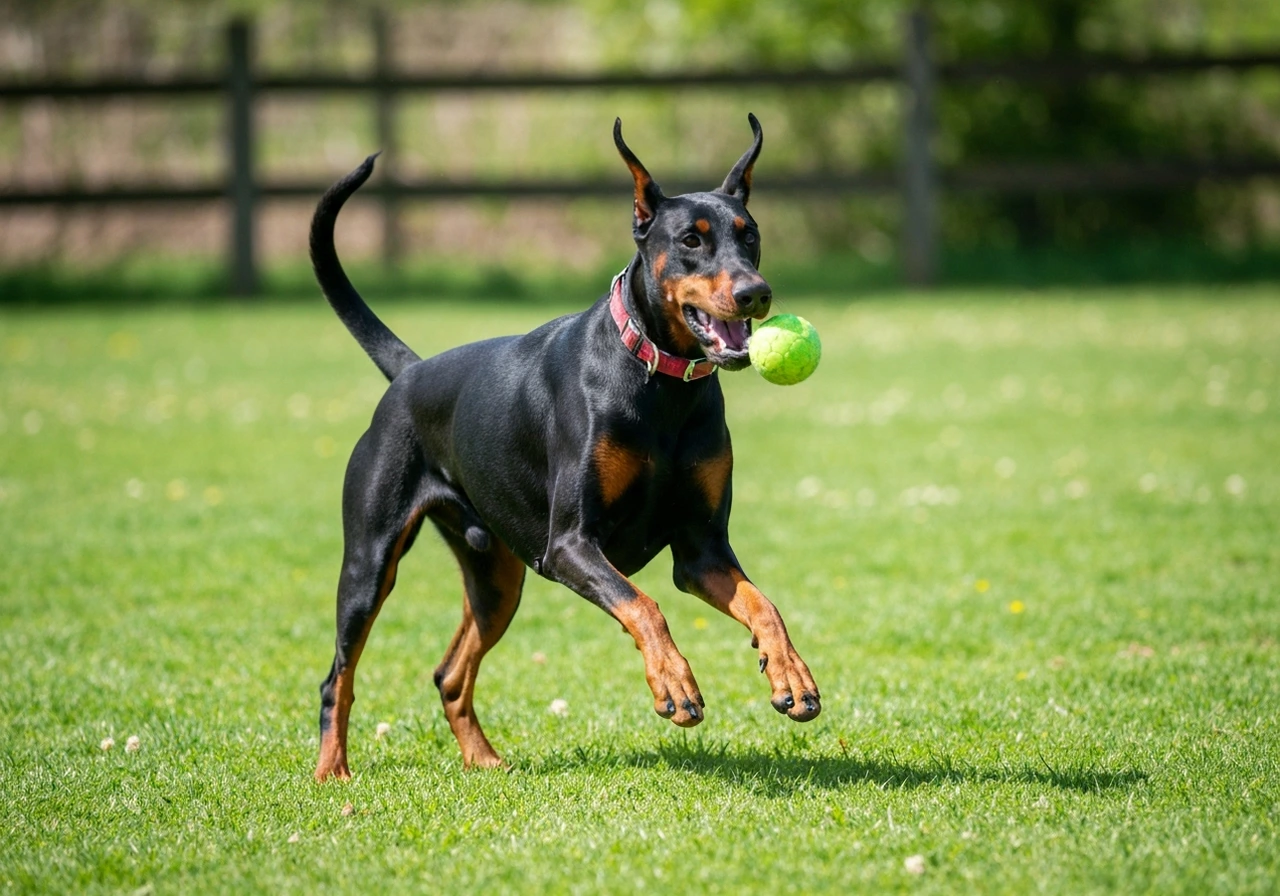
This is the classic Doberman, Rottweiler, and Gordon Setter pattern. Dark body with tan markings in specific, predictable locations: above the eyes, on the muzzle, chest, legs, and under the tail.
The distribution of tan points is remarkably consistent across breeds. Whether you are looking at a Rottweiler or a Miniature Pinscher, the tan appears in the same places. The placement is genetically programmed.
Recessive Black (a)
Recessive black at the A locus produces a solid color, similar in appearance to dominant black from the K locus. The key difference? Recessive black needs two copies to express (a/a), while dominant black needs only one (KB).
This distinction matters enormously for breeding. A solid black dog could be black because of KB at K, or because of a/a at A (with ky/ky at K). Without DNA testing, you cannot tell these apart. And they will produce completely different results when bred.
Breed-Specific Insight
German Shepherd Dogs use recessive black (a/a) for their solid black dogs, not dominant black (KB). This is why breeding two sable German Shepherds can produce solid black puppies - both parents can carry the recessive a allele. In contrast, Labrador Retrievers use dominant black (KB). Same visual result, completely different genetic mechanism.
Brindle: The Pattern Modifier
Brindle deserves its own section because it behaves differently from other patterns. The kbr allele does not create a pattern from scratch. Instead, it modifies whatever pattern the A locus provides by adding dark stripes over the phaeomelanin (red/yellow) areas.
This means brindle looks different depending on the A locus genotype:
- Brindle over sable (Ay): Stripes appear over the fawn/red base coat. This is the most common brindle presentation.
- Brindle over tan points (at): Stripes appear only in the tan point areas while the body remains dark. This creates "trindle" - a tan-point dog with brindled tan markings.
- Brindle over wild sable (aw): Stripes over the lighter bands of agouti. Less commonly seen but genetically possible.
The intensity and width of brindle stripes vary considerably between individuals and breeds. Some brindles have thin, well-defined stripes on a lighter base. Others are so heavily striped they appear almost solid dark, with only small patches of the lighter base color showing through. Breeders call these extremes "light brindle" and "reverse brindle."
The Hierarchy in Action: Predicting Patterns
Let me walk through a practical scenario that demonstrates how these loci interact.
You have a brindle male with the genotype kbr/ky at K and Ay/at at A. You breed him to a fawn female who is ky/ky at K and Ay/at at A.
At the K locus, possible puppy genotypes are:
- 50% kbr/ky (brindle)
- 50% ky/ky (allows A locus expression)
At the A locus, possible puppy genotypes are:
- 25% Ay/Ay (sable)
- 50% Ay/at (sable, carrying tan points)
- 25% at/at (tan points)
Combining these with Punnett square calculations, the litter could include:
- Brindle (stripes over sable base)
- Brindle with tan points ("trindle")
- Clear sable/fawn
- Tan point
Four visually distinct patterns from a single litter. This is exactly the kind of variety that excites some breeders and alarms others.
Why Some Breeds Have Limited Patterns
If pattern inheritance involves this much variety, why do some breeds only come in one or two patterns?
The answer is fixation. Through generations of selective breeding, certain alleles have become "fixed" in specific breeds, meaning every dog in the breed carries the same alleles at that locus.
Labrador Retrievers, for example, are essentially fixed for KB at the K locus. The A locus does not get to express. Labs come in black, chocolate, or yellow, but never sable, brindle, or tan point. The genes at A are present but permanently silenced by K. I explore this concept of allele fixation across many breeds in my article on breed-specific color genetics.
Doberman Pinschers are fixed for at at the A locus and ky/ky at K. Every Doberman shows the tan point pattern. The breed-specific variation comes from other loci: B determines whether they are black-and-tan or red-and-tan, and D determines whether the color is diluted (producing blue or isabella). Those dilute Dobermans carry a well-documented risk of Color Dilution Alopecia, which is why understanding how pattern and dilution loci combine matters for both aesthetics and health.
Breed Standards and Genetics
When a breed standard says "sable is not acceptable," that does not mean the gene is absent from the breed. It may simply mean dogs expressing sable are not shown. The allele can persist in the population as a recessive, hidden behind dominant alleles, waiting to appear in a litter someday. This is one of the core lessons in my article on hidden genetics.
The E Locus Override
Remember that all these beautiful pattern discussions become irrelevant if the E locus has its say. A dog that is e/e at the E locus displays no eumelanin in its coat, regardless of A and K genotype.
That golden-coated dog could be carrying dominant black at K, tan points at A, or any combination. You would never know by looking. The E locus has masked all of it under a blanket of phaeomelanin.
This is why DNA testing is so valuable for pattern breeding. A clear red/yellow dog could be hiding an entire wardrobe of patterns and colors underneath.
Common Pattern Breeding Mistakes
From years of consulting with breeders, I see these mistakes repeatedly:
"Both parents are sable, so all puppies will be sable." Not if both parents carry at. Two Ay/at sable parents can produce tan point puppies. The 25% probability applies just as it does at any other locus.
"My dog is solid black, so it must have dominant black." Not necessarily. Your dog could be a/a at A with ky/ky at K (recessive black), or it could be KB at K (dominant black). Same appearance, profoundly different breeding outcomes. DNA testing is the only way to know.

"Brindle is dominant to everything." Brindle is dominant to ky at the K locus, yes. But it is recessive to KB. A dog that is KB/kbr will appear solid, not brindle. And at the A locus, brindle does not interact at all with the dominance series. Brindle modifies the A locus pattern; it does not replace it.
"Reverse brindle is a different gene." Reverse brindle is not a separate allele. It is the same kbr allele with heavy striping that obscures the lighter base. Modifiers and individual variation determine how heavy the striping appears.
Testing Strategy for Pattern Breeding
If you breed a pattern-variable breed, I recommend testing for both A and K loci as a minimum. Here is my suggested protocol:
- Test all breeding stock at K locus first. This tells you whether A locus patterns can express.
- If KB is present, test A locus anyway. Those hidden A locus alleles will surface when bred to ky dogs.
- Test for brindle if relevant to your breed. Cryptic brindle (brindle over a very dark base) can hide.
- Consider E locus testing. An e/e dog could be carrying any A and K combination invisibly.
For herding breeds where pattern genetics intersects with breed-specific traits, understanding both color and health genetics is essential. Resources like The Herding Gene cover the health side of the equation for herding breed breeders.
Putting It All Together
Pattern inheritance is not one gene. It is a conversation between two loci, modulated by a third. K decides whether A gets to speak. A decides what pattern to paint. E decides whether any of it matters at all. And layered on top of all of this, the S locus controls white markings that overlay whatever pattern the A and K loci have produced, from a small chest flash on a brindle to the dramatic piebald patterning of a spotted hound.
When you see a beautifully patterned dog, you are seeing the output of this conversation. The sable shading, the precise placement of tan points, the tiger-stripe drama of brindle - all of it determined by a few alleles at a few loci, interacting according to rules that we now understand well.
The breeder who showed me those two Staffordshire Bull Terriers? Once I explained the A and K interaction, she went and tested all her breeding dogs. Within two litters, she was predicting patterns with near-perfect accuracy. That is the power of understanding pattern inheritance.
If you are ready to start applying these concepts, learn how to set up your own Punnett square predictions for multi-locus crosses. And if you want the full picture of all the color loci and how they interact, revisit my comprehensive guide to the A, B, C, D, E loci.
Key Takeaway
Pattern inheritance requires understanding two loci working together. The K locus acts as a gatekeeper for A locus expression. Testing both loci before breeding is the only reliable way to predict pattern outcomes in your litters. Start testing, start predicting, and the patterns will make sense.