Two dogs are both genetically yellow — both ee at the E locus, producing only phaeomelanin in their coats. One is pale cream, barely distinguishable from white. The other is deep, rich mahogany red. Both are "yellow dogs" by the same fundamental genetics. So what makes one pale and one vivid? The answer is the intensity locus and a complex system of modifier genes that fine-tune phaeomelanin expression.
This is one of the most actively researched areas in canine coat color genetics, partly because the molecular mechanisms are not yet fully understood, and partly because it matters enormously to breeders of Golden Retrievers, Irish Setters, Vizslas, Nova Scotia Duck Tolling Retrievers, and many other breeds where the shade of yellow or red is a defining breed characteristic.
What Is Phaeomelanin?
Melanin is not a single compound. There are two main types of melanin in dog coat color: eumelanin, which produces black and brown colors, and phaeomelanin, which produces yellow, cream, gold, and red colors. These two types are made by different biochemical pathways in the melanocyte, and they can be independently regulated.
Phaeomelanin is chemically related to cysteine, a sulfur-containing amino acid. It has a fundamentally different structure from eumelanin, which is why it absorbs light differently and produces warm, yellowish-to-red tones rather than cool dark tones.
In dogs that are ee at the E locus, the MC1R receptor is non-functional, blocking eumelanin synthesis in the coat. Cells default to phaeomelanin production. The E locus sets the stage; intensity modifiers determine how vivid the resulting phaeomelanin pigment is.
The Intensity Region: Multiple Genes Working Together
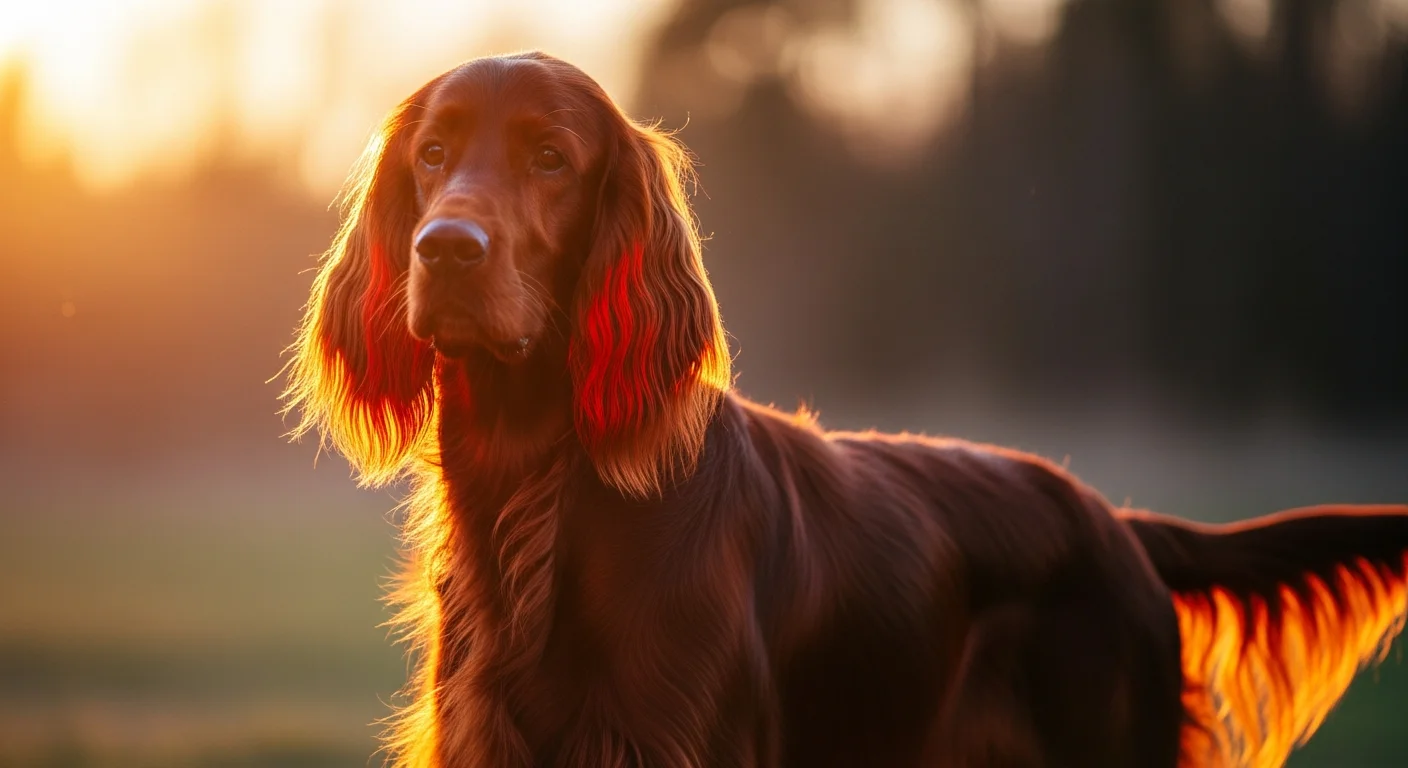
Research in the 2010s and 2020s has identified a chromosomal region involved in phaeomelanin intensity, sometimes called the intensity locus or I locus. However, it is now understood that this is not a single gene but a genomic region containing multiple genes that collectively influence phaeomelanin depth.
Among the genes implicated are SLC45A2 (melanocyte solute carrier protein), KITLG (Kit ligand, involved in melanocyte development), and others. Variants in these genes and nearby regulatory sequences affect:
- How much phaeomelanin is synthesized
- How the pigment is distributed within the hair shaft
- Whether the pigment appears uniform or shows gradients from root to tip
The result is a spectrum from minimal phaeomelanin expression (pale cream) to maximum expression (deep red or mahogany). This is not a simple two-allele system — it is a quantitative trait controlled by multiple genomic locations acting together.
Intensity in Specific Breeds
The practical consequences of intensity variation are most visible when you compare breeds:
Pale cream end of the spectrum: Samoyed, many cream-colored dogs, pale yellow Labradors, cream-colored Golden Retrievers bred in some European lines.
Mid-range golden: The classic American Golden Retriever coat, standard yellow Lab, buff Cocker Spaniel.
Rich gold to deep red: Fox-red Labrador, Irish Setter (deep mahogany red), Vizsla (golden rust), Nova Scotia Duck Tolling Retriever (red to dark golden), Irish Terrier.
All of these are the same basic genetics — ee dogs producing phaeomelanin — shifted along the intensity spectrum by different combinations of modifier alleles.
Within-Breed Intensity Variation
Even within a single breed, intensity variation can be dramatic. Yellow Labradors are the best example. The same breed can produce dogs ranging from near-white cream to deep fox-red. These differences are heritable — fox-red lines tend to produce fox-red puppies, pale cream lines tend to produce pale puppies — but the genetics are polygenic and not yet fully mappable with current testing.
Golden Retrievers show a similar pattern. The breed standard in North America describes golden as ranging from light golden to dark golden. European cream Golden Retrievers represent a different end of the same genetic spectrum, where intensity modifiers collectively push toward minimal phaeomelanin expression. This variation is explored in the context of breed-specific color genetics.
The Sable Complication
In dogs that are not ee but instead express phaeomelanin through the A locus (sable/agouti), intensity modifiers also affect the base phaeomelanin component of the coat. Sable dogs produce both eumelanin (in the dark tips) and phaeomelanin (in the body of each hair). The phaeomelanin component in sable dogs is also affected by intensity modifiers.
This is why sable German Shepherds range from very pale, almost yellow sable to deep rich mahogany sable. The dark tips come from eumelanin (relatively uniform), but the body color ranges based on phaeomelanin intensity. The pattern mechanics are explained in the pattern inheritance article.
DNA Testing for Intensity: Current Limitations
This is an area where DNA testing currently lags behind our understanding of phenotype. While we know intensity variation is highly heritable and genetically determined, the specific variants responsible are not yet all identified and validated. Some laboratories offer "shade" or "intensity" testing for specific variants in the known intensity region, but these tests explain only part of the variation.
What this means practically: if you want to consistently produce a specific shade of yellow or red, pedigree selection and observational breeding remain important alongside DNA testing. Choosing dogs from lines known to produce the shade you want is still one of the most reliable tools.
As the science advances, intensity testing will become more precise. The color testing labs comparison is updated to reflect what is currently available.
How Intensity Interacts With the K Locus
The K locus determines whether the A locus can express at all. In dogs that are KBKB (dominant black at K), the A locus is suppressed and phaeomelanin is not visible in the coat, regardless of intensity alleles. But in dogs where the A locus can express (those that are kyky at K), intensity modifiers act on the phaeomelanin component of whatever A locus pattern is expressed.
This layering — where one gene controls whether another can express, and then intensity modifiers tune the expression — is a good example of the multi-level regulation system that produces canine coat diversity. The K locus is covered in depth in the K locus article.
The Frontier of Intensity Research
Canine coat color genetics is not a closed chapter. The intensity locus region continues to be studied, with new variants being identified as whole-genome sequencing becomes more accessible. Within the next five to ten years, it is likely that commercial testing panels will include comprehensive intensity variant panels that explain most within-breed variation.
For breeders who work with red, gold, cream, or yellow dogs and care about shade, this is worth following. The fundamental principles of how phaeomelanin is controlled will remain the same even as our ability to test for specific variants improves. Everything still starts with the foundations in Color Genetics 101.
Further Reading
For herding breed enthusiasts working with sable German Shepherds, Rough Collies, or Shetland Sheepdogs where phaeomelanin richness matters, visit our partner site The Herding Gene.