A breeder came to me frustrated after a litter from two chocolate carriers produced eight black puppies in a row. "Your genetics is wrong," she told me. "Both parents carry chocolate, but I got zero chocolates." I had to gently explain that zero chocolates from this cross, while unlikely, is a perfectly possible outcome — and that probability does not guarantee a result in any individual litter. This article is about understanding that distinction.
The math behind color inheritance is not complicated, but it is frequently misunderstood. When you understand what the numbers actually mean — and what they do not mean — you can hold genetic predictions and breeding outcomes in the right relationship. You will stop being surprised by litters that are "wrong" when they are statistically unusual but perfectly valid.
Probability vs. Certainty: The Fundamental Distinction
Punnett squares give you probabilities, not guarantees. When I say "a cross between two Bb dogs gives a 25% chance of producing bb puppies," I mean that each puppy in that litter has an independent 25% probability of being chocolate. Not that exactly one in four will be chocolate. Not that the litter must contain chocolate dogs.
This distinction matters enormously for interpreting results. The method for setting up these calculations is covered in the Punnett square guide. This article focuses on what to do with those numbers once you have them.
Independent Events: Why Each Puppy Is a Fresh Coin Flip
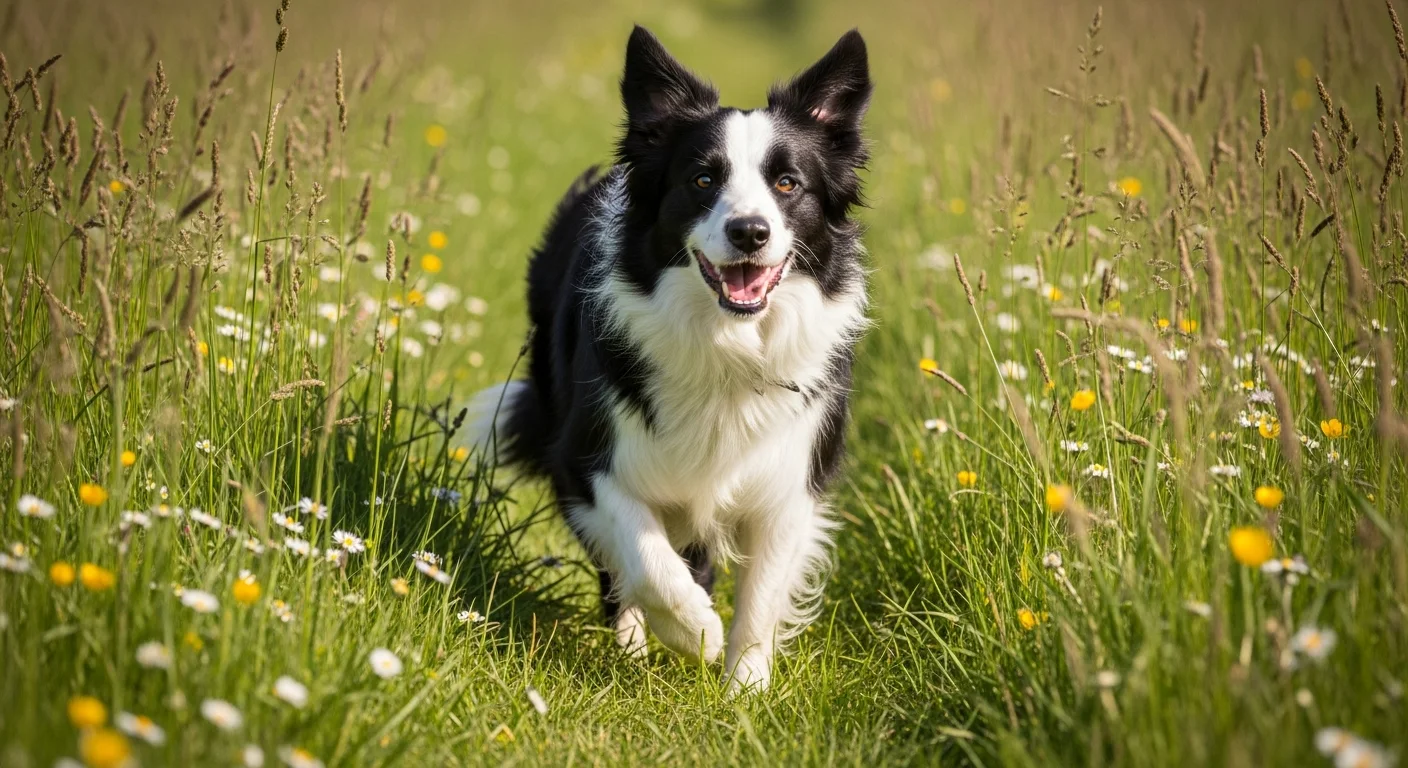
Each fertilized egg is an independent genetic event. The alleles that go into one egg do not affect the alleles that go into any other egg. This is the key assumption underlying all Mendelian probability calculations.
Think of it like flipping a fair coin. The coin has a 50% chance of heads on each flip. If you flip it ten times and get eight heads, that does not mean the next flip is more likely to be tails. The coin has no memory. Each flip is independent.
Genetics works the same way. If a litter of five puppies are all black from a carrier pair, the sixth puppy still has a 25% chance of being chocolate — not a higher chance to "compensate." There is no genetic debt that gets repaid across a litter.
Calculating Probabilities for Multi-Locus Crosses
When multiple loci are involved, you multiply the individual probabilities. This is the product rule of probability.
Example: What is the probability of a puppy being chocolate AND dilute (lilac) from parents that are both Bb Dd?
- Probability of bb at the B locus: 25% (0.25)
- Probability of dd at the D locus: 25% (0.25)
- Combined probability: 0.25 × 0.25 = 0.0625 = 6.25%
In a litter of eight puppies, you would expect on average 0.5 lilac puppies — less than one. The lilac outcome is possible but statistically rare even in favorable crosses. This is exactly why unexpected colors can appear once in a while and then not reappear for multiple litters: the probability math says they should be rare, and they are.
Connection to Hidden Genetics
Rare multi-locus recessive combinations are one of the main reasons surprise colors appear in litters when you least expect them. The full story of hidden genetics and surprise colors connects directly to this probability math.
The Binomial Distribution: What Litter Outcomes Really Look Like
For breeders interested in deeper statistical thinking, the binomial distribution describes the probability of getting exactly k successes in n independent trials, each with probability p. Applied to genetics:
If both parents are Bb and you have a litter of eight, what is the probability of getting zero chocolate puppies?
Using the binomial formula: P(k=0, n=8, p=0.25) = (0.75)^8 ≈ 0.100
There is roughly a 10% chance of getting zero chocolate puppies from a Bb × Bb cross in a litter of eight. That means about one in ten such litters will have no chocolate puppies despite both parents being carriers. Not a genetics error. Not a laboratory mistake. Statistics.
What about the probability of getting at least one chocolate? That is 1 - 0.100 = 90%. Most litters will show at least one chocolate. But 10% will not. Both are valid outcomes.
Expected Values vs. Actual Litter Composition
Expected value is the average number of a particular color you would expect across many litters, not the guaranteed number in any one litter. In a Bb × Bb cross, the expected number of chocolate puppies in a litter of eight is 2 (25% of 8). But actual litters can range from zero to eight.
Breeders who understand this stop worrying when their carrier pair produces an all-black litter. They also stop assuming that a litter with four chocolates means "something went wrong" — it is simply in the upper tail of the distribution.
How Litter Size Affects Predictive Reliability
Probability predictions become more reliable as sample size increases. In a litter of two puppies, any outcome is plausible. In a litter of twenty, the distribution will be closer to the expected ratios. This is why breeders who rely on visual litter outcomes to infer parental genotypes need large sample sizes before drawing conclusions.
In practice: if you breed a pair and get twenty puppies across multiple litters with no chocolates, you can be fairly confident neither parent is a chocolate carrier. But two litters of four with no chocolates? That is consistent with carrier status and simply unlucky results. DNA testing bypasses this uncertainty entirely, which is why I recommend it in the DNA testing guide.
Three-Locus Calculations: Where It Gets Complex
Most real breeding decisions involve more than two loci simultaneously. Calculating the probability of a specific three-locus genotype means multiplying three individual probabilities together, which produces very small numbers very quickly.
This is why rare color combinations can be genuinely difficult to produce intentionally. If each locus has a 25% chance of giving you the recessive homozygote, and you need three specific loci all to be recessive simultaneously, you are looking at 0.25 × 0.25 × 0.25 = 1.56% probability per puppy. In a normal litter size, you might breed for years before seeing that combination.
Breeders who understand this use DNA testing to select breeding pairs where both parents already carry the necessary alleles at multiple loci, improving the probability and reducing the number of litters required to produce the target color.
Applying This to Color Planning
Here is a practical workflow for using probability math in your breeding program:
- DNA test both parents to confirm genotypes at relevant loci
- Set up Punnett squares for each locus separately
- Read the probability for the genotype you want at each locus
- Multiply probabilities across loci to get the combined probability for your target color
- Use the binomial distribution to understand the realistic range of outcomes given your typical litter size
- Repeat matings if needed — probability improves with multiple litters from the same pair
This process connects the abstract genetics I cover in Color Genetics 101 to the concrete decisions you make when selecting breeding pairs.
The Limits of Prediction
Genetics prediction has limits. There are coat color modifiers that are not yet well-characterized genetically. There are interactions between known loci that behave in ways that are not fully understood. And the random nature of meiosis — how chromosomes are divided during sperm and egg formation — means that even perfect genotype knowledge cannot guarantee any individual puppy's outcome.
What genetics prediction gives you is a probability framework. You can say "this cross should produce mostly X with some chance of Y." You cannot say "this litter will have exactly three X and two Y." The numbers are useful guides, not scripts that nature is obligated to follow.
Further Reading
For herding breed breeders interested in applying probability math to merle and other pattern genetics, visit our partner site The Herding Gene.