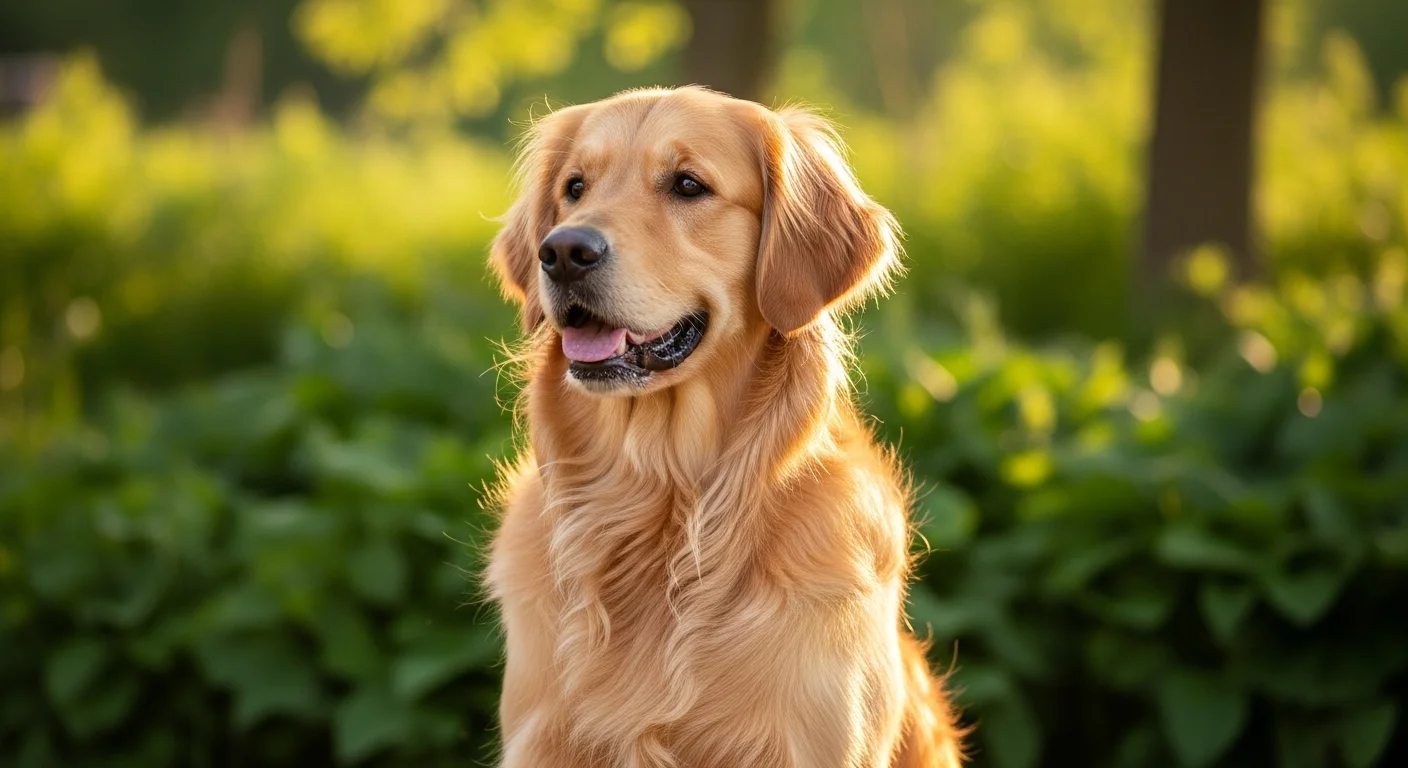
When a Golden Retriever steps into a room, no one questions the color. It is obviously yellow. But ask a geneticist why, and you will get an answer that surprises most breeders: that Golden is yellow not because it has yellow pigment genes, but because it cannot make dark pigment at all. The E locus is responsible for this, and understanding it will change how you think about red and yellow dogs forever.
The E locus controls what geneticists call pigment extension — the ability of melanin to extend, or distribute, into the coat. This makes the E locus one of the most powerful overrides in the entire color genetics system. When it blocks pigment extension, the dog's other color genes become essentially irrelevant to what you see.
What the E Locus Actually Does
At the molecular level, the E locus encodes the melanocortin 1 receptor, abbreviated MC1R. This receptor sits on the surface of melanocytes, the pigment-producing cells in the skin and hair follicles. It acts like a switch that tells cells whether to produce eumelanin (dark pigment — black, brown, blue, or liver depending on other genes) or phaeomelanin (red and yellow pigment).
When the receptor is working normally, eumelanin can be produced. When the receptor is blocked by a recessive allele, cells default to phaeomelanin production. The dark pigment is locked out. This is why breeders call the recessive allele at E the "extension locus recessive" — it prevents dark pigment from extending into the coat.
Key Insight
A yellow Labrador could be BB (carrying only black alleles at the B locus) or bb (carrying two chocolate alleles). But if it is ee at the E locus, it looks yellow either way. The B locus result is hidden. This is epistasis — when one gene masks the expression of another. I cover this in detail in my article on how multiple loci interact.
The Alleles at the E Locus
The E locus has several alleles worth knowing, and they are not all equal in frequency or importance depending on the breed you work with.
EM is the mask allele. Dogs with at least one copy of EM show a dark facial mask — the black muzzle you see on German Shepherds, Boxers, and Pugs. EM is dominant and will show even in one copy.
E is the standard allele. Dogs with at least one E and no EM can produce eumelanin normally. Whatever their other genes say about color, the E locus allows it to express.
e is the recessive allele. A dog must have two copies — ee — to be affected. When homozygous recessive, the dog cannot produce eumelanin in the coat, so all coat pigment defaults to phaeomelanin: yellow, cream, gold, or red depending on intensity modifiers.
The Range of Yellow and Red
If all ee dogs just produced phaeomelanin, why are some cream, some pale yellow, some rich gold, and others deep red? The answer is the intensity locus and other modifiers that fine-tune how much phaeomelanin is produced and how rich it appears.
Irish Setters carry genes that push phaeomelanin expression to maximum intensity. Their rich, deep mahogany red comes from the same basic e-locus mechanism as a pale cream Samoyed — but modifier genes dial the intensity up dramatically. You can read more about this in my piece on the intensity locus and phaeomelanin pigment.
Some breeds, like Yellow Labradors, span a wide range of shades from pale cream to rich fox-red. These are all ee dogs, just with different modifier alleles controlling the depth of their yellow.
Nose and Eye Leather in ee Dogs
Here is something that trips up many breeders. When a dog is ee, dark pigment is blocked in the coat — but not entirely in the nose, eye rims, and other points. These pigment-producing areas have slightly different MC1R behavior.
The result is that ee dogs can have black or liver noses depending on their genotype at the B locus. A yellow Lab with a black nose is likely BB ee or Bb ee. A yellow Lab with a pink or brown nose may be bb ee — homozygous liver at B, even though you cannot see it in the coat.
Practical Note for Breeders
If you breed ee dogs and want to know their true color genotype at other loci, a nose or eye rim color can give clues, but DNA testing is far more reliable. Many yellow and cream dogs are unwitting carriers of recessive genes like chocolate at the B locus. This connects directly to topics in the DNA testing guide.
E Locus and the A Locus Relationship
The A locus controls sable, agouti, tan point, and recessive black patterns. It is a fascinating set of genes — but only when the dog can actually produce eumelanin. If a dog is ee, the A locus is completely hidden. No sable pattern, no tan points, no agouti agouti: just yellow.
This has practical breeding implications. An ee dog that is also atat (homozygous tan point at the A locus) will look yellow, not tan-pointed. Breed that dog to a mate that allows E locus expression, and tan-pointed puppies may appear in the litter, surprising breeders who thought both parents were simply yellow.
Breeds Where the E Locus Dominates
Several breeds are fixed at ee, meaning virtually every dog in the breed is homozygous recessive at E. Golden Retrievers, Yellow Labradors, and Irish Setters are the most well-known examples. When a breed is fixed at ee, other color genes become genetically irrelevant to coat appearance, though they matter for nose and point color.
Other breeds show the E locus as one of several factors. In Cocker Spaniels, German Shepherds, and mixed-breed dogs, the interaction between E, A, B, and K loci creates the full diversity of colors you see. Understanding the E locus is always your starting point when trying to decode breed-specific color genetics.
The EM Mask Allele in Detail
The mask allele deserves special attention because it behaves differently from the other E alleles. EM is dominant over both E and e. A dog with one copy of EM will show a dark mask regardless of what the other E allele is.
This creates interesting situations. A dog that is EMe will have a dark mask and a eumelanin-pigmented body because EM allows pigment extension. But breed two EMe dogs, and one in four puppies will be ee: no mask, yellow body.
In Boxers, Pugs, and Mastiff-type breeds, EM is nearly fixed in the population. In Shetland Sheepdogs, the interaction of EM with sable creates the sable-and-white dogs with darker faces many breeders prize.
Using Punnett Squares for the E Locus
Predicting E locus outcomes works exactly like any other single-locus cross. The principles covered in the Punnett square guide apply directly here. A cross between two Ee dogs (both showing dark color, both carrying yellow) gives a 25% chance of producing ee puppies in each position.
The complexity comes when you factor in EM. Standard Punnett squares only work for two alleles at a time. When three alleles are in play, you need to know which is dominant over which, and track them carefully.
What to Test and When
If you breed any of the following, E locus testing is worth considering:
- Breeds where yellow or cream appears and you want to predict which puppies will carry it
- Breeds with facial masks where you want to breed for or against the mask
- Any breeding program where unexpected yellow or cream puppies appeared
- Dogs of unknown heritage that look yellow or cream when you expected darker colors
Several reputable laboratories offer E locus panel testing. You can compare options in the color testing labs comparison.
Putting It Together
The E locus is elegant in its logic. It is a master switch that says yes or no to dark pigment in the coat. When it says no — when a dog is ee — everything else about the dog's dark pigment genes becomes invisible to the naked eye. When it says yes, those other genes get to speak.
For breeders working with yellow, cream, gold, or red dogs, the E locus is your first stop in any genetic analysis. Once you know whether dark pigment is even possible, you can work through the rest of the loci systematically. That methodical approach is at the heart of everything I teach in the Color Genetics 101 foundations.
Further Reading
For herding breed breeders interested in how the E locus interacts with the merle pattern and eye color, visit our partner site The Herding Gene.