A student once asked me a deceptively simple question: "If all dogs share the same color genes, why do Labradors never come in brindle and Boxers never come in merle?" That question opens a fascinating chapter of genetics that most coat color resources skip over entirely. The answer lies in what breeders have done, deliberately and sometimes accidentally, over centuries of selective breeding.
Every breed is a genetic snapshot. A population where certain alleles have been selected for, selected against, or simply drifted to fixation through small population effects. Understanding which alleles are fixed in your breed transforms color genetics from abstract theory into practical, breed-specific knowledge.
What "Fixed" Means in Genetics
When I say an allele is "fixed" in a breed, I mean every individual in the breed carries the same allele at that locus. There is no variation. If you test a thousand dogs, you get the same result a thousand times.
Fixation happens through selection. When breeders consistently choose dogs of a particular color to breed from, and exclude others, the alleles responsible for that color become more common in the population. Over enough generations, the alternative alleles disappear entirely.
This is why understanding both the individual loci and your breed's specific allele profile matters. The genes are the same across all dogs. The allele combinations are what make each breed unique.
The Poker Analogy
I tell my students to think of each locus as a card position in a poker hand. Every breed is dealt from the same deck, the same set of possible alleles. But through generations of selection, each breed has ended up with a specific hand. Labradors hold certain cards. German Shepherds hold different ones. Same deck, different hands, different outcomes.
Labrador Retrievers: A Case Study in Simplicity
Labradors are the perfect starting point because their color genetics are deceptively simple. Three colors: black, chocolate, and yellow. That is it. But underneath that simplicity lies a specific combination of fixed and variable loci.
What is fixed in Labs:
- KB at the K locus - Labs carry dominant black, which overrides the A locus entirely. This is why you never see sable, brindle, or tan point Labradors.
- The A locus is effectively irrelevant in Labs, since KB suppresses all A locus patterns.
What varies in Labs:
- The E locus: E versus e. Dogs with ee are yellow, regardless of B or K genotype.
- The B locus: B versus b. Dogs with bb (and at least one E) are chocolate. Dogs with at least one B and one E are black.
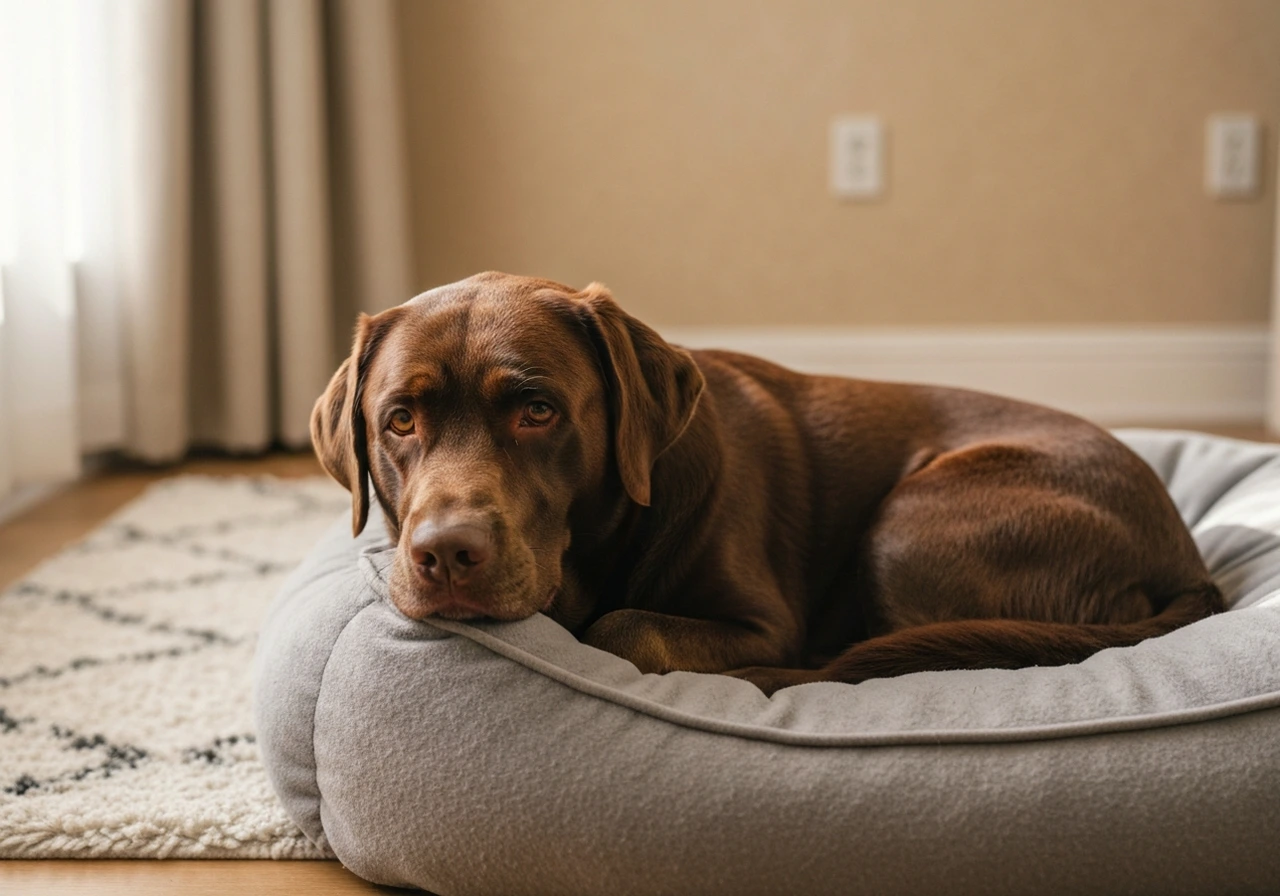
This means Lab color genetics comes down to two loci with two alleles each. That is why Punnett squares for Lab color predictions are among the most straightforward you will ever create. Two black Labs that both carry chocolate and yellow (BbEe) can produce all three colors. Understanding this is often a breeder's first "aha" moment with genetics.
What about "silver" Labradors? Silver Labs are dd at the D locus, which dilutes black to charcoal, chocolate to silver, and yellow to champagne. The D locus is not historically fixed in Labs, though dilute was extremely rare until recently. The controversy over whether dilute was always present at very low frequency or was introduced through crossbreeding remains unresolved.
German Shepherd Dogs: The Recessive Black Breed
German Shepherds illustrate a fascinating contrast with Labs. Both breeds produce solid black dogs, but through completely different genetic mechanisms.
What is fixed in GSDs:
- ky/ky at the K locus - GSDs do not carry dominant black. The K locus allows full A locus expression.
- Em at the E locus (in most lines) - This creates the melanistic mask, the dark face typical of the breed.
What varies in GSDs:
- The A locus carries multiple alleles: Ay (sable), aw (wild sable), at (tan points, the classic saddle pattern), and a (recessive black).
- The B locus: Liver GSDs exist (bb) though they are not standard.
The key insight: a solid black German Shepherd is a/a at A, not KB at K. Two sable GSDs can produce solid black puppies if both carry the recessive a allele. This confuses breeders who assume black must come from a black parent. It is a textbook example of hidden genetics at work.
The White GSD Question
White German Shepherds are ee at the E locus. The recessive red allele masks all eumelanin, producing a white or cream coat. These dogs can carry sable, tan points, or recessive black at the A locus, but you will never see it in their coat. This is one of the most striking examples of how the E locus can mask an entire spectrum of hidden color alleles.
Doberman Pinschers: Fixed Pattern, Variable Color
Dobermans show us what happens when a breed fixes its pattern loci but allows variation at the color loci.
What is fixed in Dobermans:
- ky/ky at K - Allows A locus expression
- at/at at A - All Dobermans are tan point. Every single one. No sable Dobermans, no recessive black Dobermans.
What varies in Dobermans:
- The B locus: B_ produces black-and-tan. bb produces red (liver) and tan.
- The D locus: D_ gives full intensity. dd produces blue-and-tan or fawn (isabella) and tan.
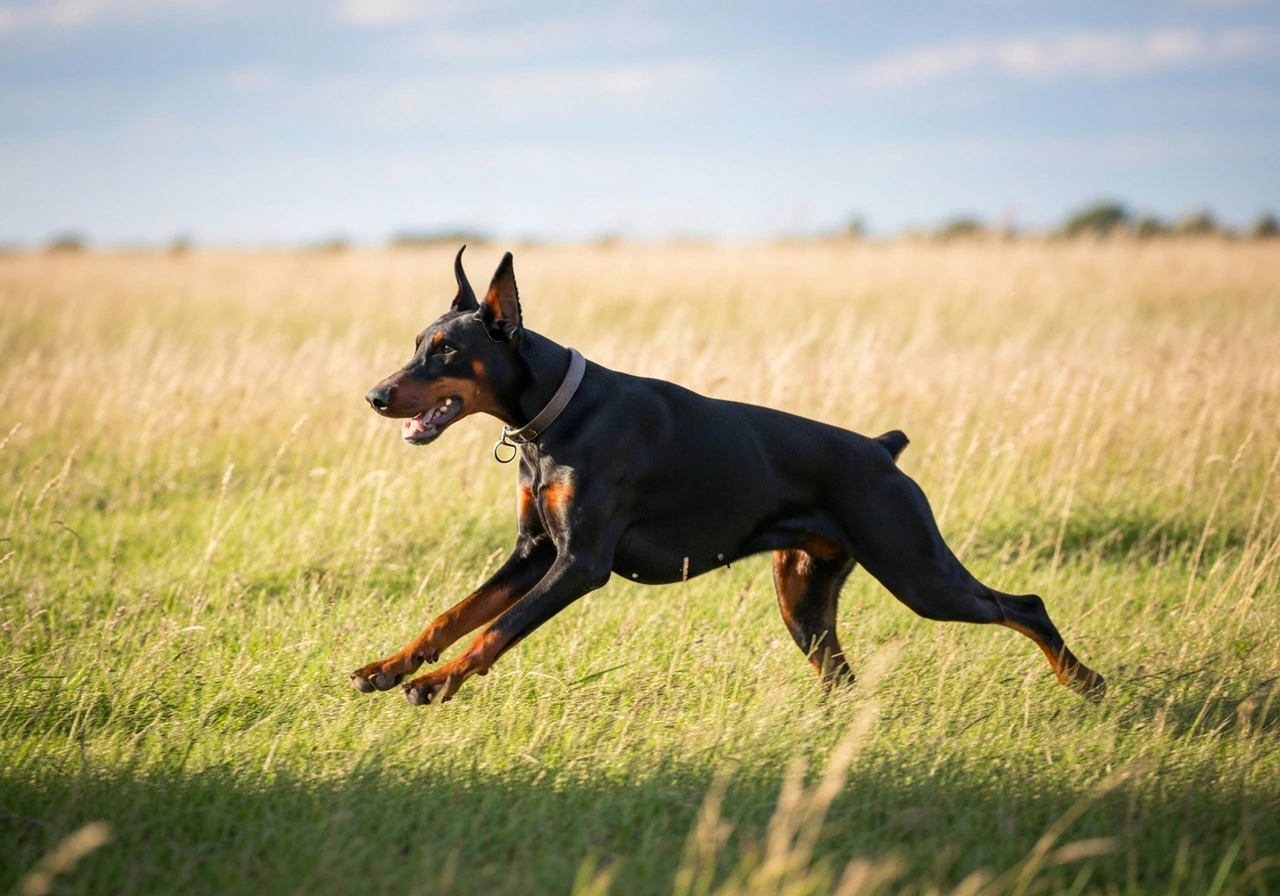
This gives Dobermans four possible color combinations: black and tan (B_D_), red and tan (bbD_), blue and tan (B_dd), and fawn and tan (bbdd). The pattern never changes, only the shades within it.
The blue and fawn Dobermans carry a particularly high risk of Color Dilution Alopecia. Some breed clubs have actively discouraged breeding dilute Dobermans because of this. Understanding the breed's fixed and variable loci helps explain why CDA is a Doberman issue but not, say, a Weimaraner issue, despite both breeds carrying the dd genotype.
Staffordshire Bull Terriers: The Full Palette
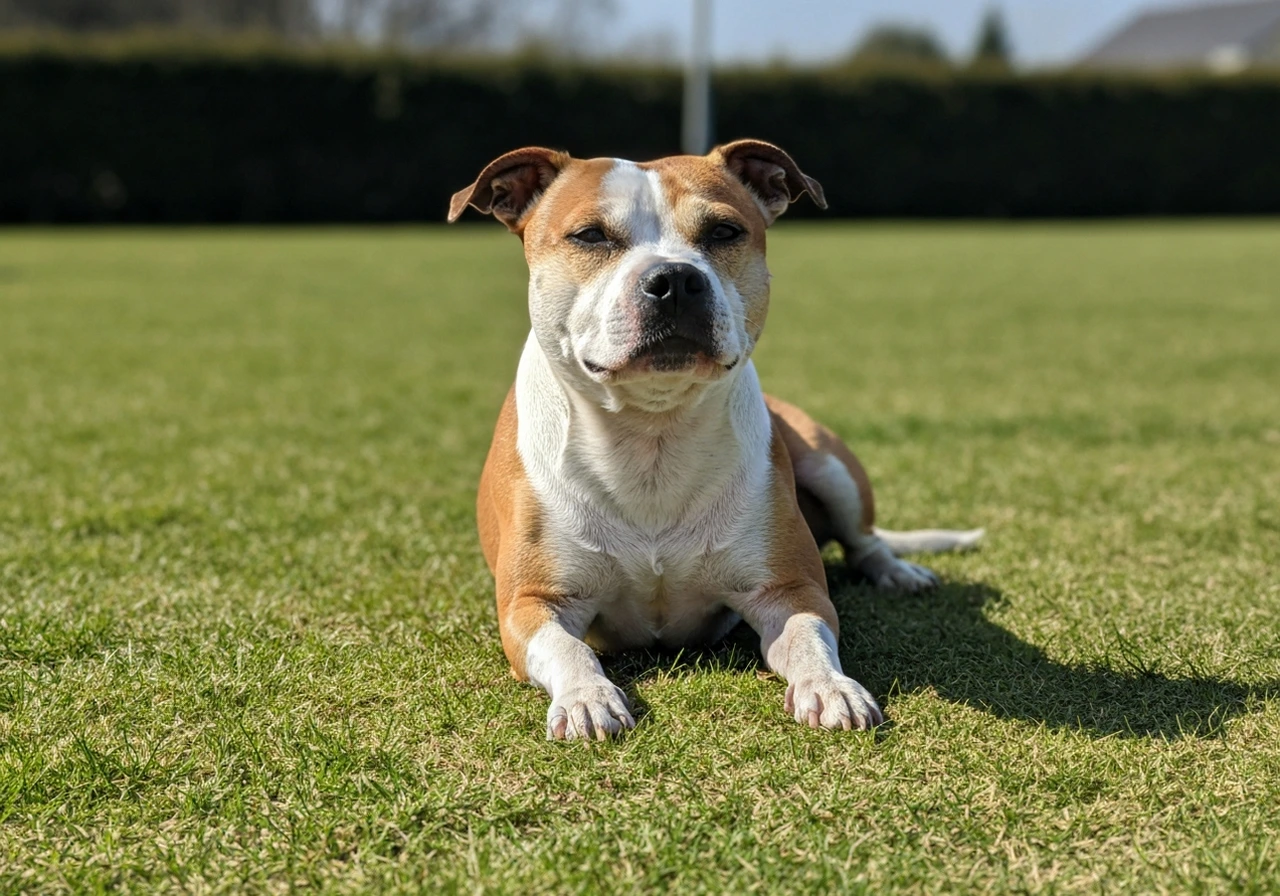
If Labradors represent simplicity, Staffordshire Bull Terriers represent the opposite. This breed retains variation at nearly every color locus, which is why their color range is enormous.
What varies in Staffords:
- K locus: KB, kbr, and ky are all present. This allows solid, brindle, and full A locus pattern expression.
- A locus: Ay (fawn/sable) is the primary pattern allele, but others can occur.
- B locus: Both B and b are present, giving black-based and liver-based dogs.
- D locus: Both D and d are present, allowing dilute colors.
- E locus: Both E and e are present.
- S locus: Variation from solid to piebald white patterning exists within the breed.
This means a single Stafford litter could include black, brindle, fawn, red, blue, blue brindle, and various combinations with white markings. For a breeder new to the breed, the variety is overwhelming until you understand which alleles the parents carry.
The Stafford is the breed I most frequently recommend comprehensive DNA color testing for, precisely because so many loci are variable. Without testing, predicting litter colors is largely guesswork.
Golden Retrievers: The E Locus Lock
Golden Retrievers beautifully illustrate what happens when one locus overrides everything else. Every Golden Retriever is ee at the E locus. This means no eumelanin reaches the coat, period.
What are Goldens carrying invisibly beneath that golden coat? They carry alleles at the A, B, D, and K loci that they can never express. A Golden Retriever might be genotypically a tan-point, dominant-black, chocolate-carrying dog, but you would never know by looking. The ee genotype masks it all.
The variation you do see in Goldens, from pale cream to deep red, is controlled by the I locus (Intensity) and other modifiers that affect phaeomelanin shade. These modifiers are less well understood than the major color loci, but they are clearly under genetic control since shade tends to run in families.
Practical Implication
Because Goldens are fixed ee, you will never produce a black or chocolate Golden from two Golden parents. But if a Golden is used in a crossbreeding program (as in Goldendoodles), the hidden alleles at B, D, A, and K suddenly become relevant. The first-generation cross puppies that inherit one E from the non-Golden parent can express all those hidden colors, sometimes to the breeder's surprise.
Rottweilers: Maximum Fixation
Rottweilers represent perhaps the most extreme example of allele fixation in a common breed. Nearly every color locus is fixed:
- ky/ky at K - Allows A locus expression
- at/at at A - Always tan points
- B/B at B - Always black eumelanin (no chocolate Rottweilers in properly bred lines)
- D/D at D - Always full intensity (no blue Rottweilers in properly bred lines)
- E/E or E/e at E - Eumelanin can reach coat (though some lines carry e)
- S/S at S - Minimal white markings
The result: every Rottweiler looks essentially the same in terms of color pattern. Black body, tan points in the standard locations. The only variation is in the richness of the tan, which is influenced by modifier genes.
When "off-color" Rottweilers appear (red, blue, or liver), it typically indicates either a hidden recessive that persisted in the breed at very low frequency, or an undisclosed crossbreeding somewhere in the pedigree. Either way, these dogs tell us something about the genetic history of their line.
Border Collies: The Color Laboratory
Border Collies are genetically one of the most color-diverse breeds. Unlike many breeds where color was a primary selection criterion, Border Collies were historically selected almost exclusively for working ability. Color was secondary, which meant alleles at most color loci were retained in the population.
Border Collies can carry alleles at the E, B, D, A, K, S, M, and T loci, giving them one of the widest color ranges of any breed. Black and white, red and white, blue merle, red merle, tricolor, sable, blue, lilac, and many more combinations are all genetically present in the breed.
This diversity makes Border Collies an excellent breed for studying color genetics in practice. If you want to learn how the loci interact in real breeding decisions, this is the breed that will teach you everything.
Why This Matters for Your Breeding Program
Understanding your breed's specific allele profile has practical implications:
It tells you which tests to run. Testing a Rottweiler at the K locus is a waste of money. The breed is fixed. But testing a Staffordshire Bull Terrier at K is essential because multiple alleles are present.
It explains "impossible" colors. When an off-standard color appears, knowing the breed's typical allele profile helps you determine whether it comes from a hidden recessive or from an outcross. The answer has significant implications for breeding decisions.
It guides crossbreeding predictions. If you work with designer breeds or participate in outcross programs, knowing which alleles each parent breed carries is essential for predicting what the offspring might look like.
It reveals health connections. Some breed-specific color profiles carry health implications. Dalmatians are fixed for extreme piebald, which contributes to deafness rates. Dobermans carry dilution that links to CDA. Your breed's color genetics may intersect with health in ways you need to understand.
A Broader Perspective
When I teach breed-specific genetics to my students, I always remind them that the alleles we see fixed in breeds today are a snapshot of human choices. Breed founders selected for certain traits, including color, and the allele frequencies shifted accordingly. There is nothing biologically inevitable about a Rottweiler being black and tan. It is a human choice, maintained through generations of selection. Understanding this helps breeders appreciate both the power and responsibility of their role.
The Trend Toward "Rare" Colors
In recent years, there has been growing market demand for unusual colors within established breeds. Blue French Bulldogs, merle Poodles, silver Labradors, white Dobermans. In many cases, these colors require alleles that are not traditionally present in the breed.
This raises important questions. If an allele was not historically present, where did it come from? If it was present at very low frequency, what were the reasons previous breeders selected against it? Sometimes those reasons were purely aesthetic. But sometimes they were health-related.

My recommendation: before pursuing a rare color in your breed, research its genetic basis thoroughly. Understand which loci are involved, whether the alleles were historically present, and whether there are health implications. DNA testing is your best tool for verifying what is actually happening genetically, rather than relying on visual assessment alone.
Building Your Breed's Color Map
I encourage every serious breeder to build what I call a "color map" for their breed. This is a simple document that lists each major locus and records which alleles are known to be present in the breed:
- List all major loci: E, A, K, B, D, S, M, and any breed-specific modifiers
- For each locus, note which alleles are present in the breed (consult breed club resources, published research, and testing databases)
- Mark which loci are fixed (no variation) and which are variable
- Note any health connections for specific alleles
- Update as new research or testing data becomes available
This color map becomes your breeding reference. When planning a litter, you consult the map to know which loci matter and which you can ignore. It saves testing money, improves predictions, and helps you understand every puppy in every litter.
Putting It All Together
Every breed is a unique genetic story. That story is written in allele frequencies, shaped by selection pressures, and readable through DNA testing. When you understand your breed's specific chapter of that story, color genetics stops being abstract and becomes practical.
Start with the fundamentals of color genetics. Learn the loci and their alleles. Then narrow your focus to your specific breed. Which loci are fixed? Which are variable? What surprises might be hiding in your lines?
The answers will make you a better breeder. Not because you will produce "prettier" puppies, though that might happen. But because you will understand exactly why each puppy looks the way it does. And in breeding, understanding is everything.
Breed-Specific Resources
For herding breeds specifically, color genetics is just one piece of a larger genetic picture that includes health conditions like MDR1 drug sensitivity. Explore the herding breed genetic landscape at The Herding Gene.