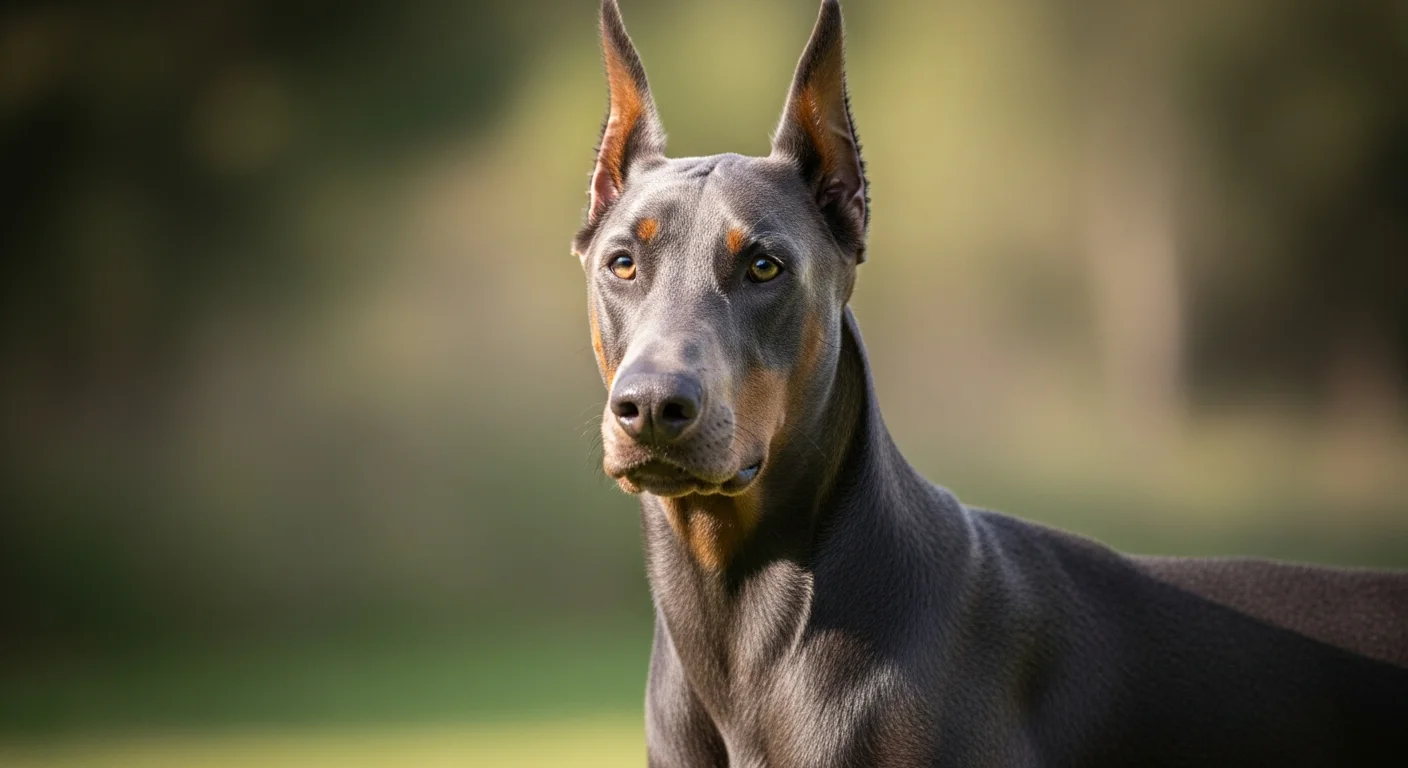
There is a quality to the color of a blue Doberman or a slate-grey Weimaraner that is unlike any other coat in dogs. The pigment looks soft, almost hazy, as if the color has been photographed slightly out of focus. That visual quality comes from a real physical change in how pigment granules are distributed inside the hair shaft, and the gene responsible is the dilution locus — D.
The D locus is deceptively simple on the surface. One dominant allele keeps pigment at full strength. Two recessive copies dilute it. But the consequences — both visual and health-related — make the D locus one of the most important you will encounter in canine genetics.
The Mechanism of Dilution
The D locus encodes the MLPH gene, which produces melanophilin. This protein plays a critical role in transporting melanin granules from the cell's pigment-producing center to the hair follicle where they are deposited. Think of melanophilin as the delivery driver for pigment.
When melanophilin functions normally (dominant D allele), melanin granules are delivered evenly and densely throughout the hair shaft. The result is rich, full pigmentation. When melanophilin is disrupted (d allele, homozygous), the delivery system fails. Granules clump unevenly in the hair shaft, leaving patches of pigment interspersed with areas of no pigment. The visual result: a diluted, faded appearance.
The pigment itself is the same chemical. It is not degraded or altered. It is simply distributed differently, and that uneven distribution reads as a lighter color to our eyes.
What the D Locus Does to Each Base Color
The D locus dilutes whatever eumelanin color the dog already has at the B locus. It does not affect phaeomelanin (yellow/red pigment) in the same way.
- Black + dilution = Blue. The steel-grey, smoky color seen in blue Dobermans, blue Great Danes, blue French Bulldogs, and Weimaraners.
- Chocolate/liver + dilution = Lilac (also called isabella or silver-fawn). A soft pinkish-grey-brown seen in some French Bulldogs, Dobermans, and Labradors.
- Yellow/red base (ee dogs) = Some lightening can occur, but the effect is less dramatic because phaeomelanin is less affected by MLPH dysfunction.
The dd Genotype in Practice
Because d is fully recessive, a dog must be dd to show dilution. Dogs with one copy — Dd — are carriers. They look fully pigmented. This means dilute colors can appear unexpectedly in litters when two carriers are bred together, even if neither parent looks dilute.
This carrier dynamic is the same mechanism I describe in the hidden genetics article. A recessive allele can travel invisibly through multiple generations until two carriers are mated and produce homozygous recessive offspring.
Carrier Math
Two Dd carriers bred together produce: 25% DD, 50% Dd carriers, 25% dd dilute. In a litter of eight puppies, you would expect statistically two dilute puppies, but real litter outcomes can vary significantly. See Punnett square predictions for the probability math.
Color Dilution Alopecia: The Health Concern
This is where the D locus becomes more than just aesthetics. The same clumping of melanin granules that creates the dilute coat appearance also stresses and damages hair follicles in some dogs. The result is color dilution alopecia (CDA), a progressive skin and coat condition specific to dilute dogs.
I have written a dedicated article on Color Dilution Alopecia that covers the full picture. The short version: not all dilute dogs develop CDA, but the risk is real and breed-dependent. Dobermans are among the most commonly affected breeds. Italian Greyhounds, Chihuahuas, and some Dachshunds are also frequently cited.
The condition typically appears in young dogs as dry, flaky skin and thinning coat in the dilute-colored areas. It can range from mild to severe, and there is no cure — only management. This is why responsible breeding practice in breeds prone to CDA involves careful consideration of whether to propagate dilute alleles.
Blue Dogs vs. Naturally Grey Breeds
Not all grey dogs are dilute in the genetic sense. Weimaraners, for example, are grey — but their grey has a different genetic basis than the blue seen in Dobermans or Great Danes. True Weimaraner grey involves their breed-specific genetics that are not simply explained by the dd genotype alone, though dilution is involved.
Similarly, Old English Sheepdogs are often described as blue-grey, but their coat texture and breed-specific modifier genes mean the visual result differs from the smooth blue of a dilute short-coated breed. Understanding the difference requires looking at the complete genetic picture, including breed-specific color genetics.
The Silver Labrador Controversy
If you breed or follow Labrador Retrievers, you have encountered this debate. Silver Labs — which carry the dilute gene and have a blue-grey chocolate (lilac/silver) coat — are controversial in the breed community.
The genetics are clear: silver Labs are bb (chocolate) plus dd (dilute), producing lilac. The controversy is about breed purity — how did the d allele enter the Labrador gene pool? The Labrador Retriever standard does not recognize silver as an acceptable color, and the AKC registers them as chocolate despite their distinctly different appearance.
Whatever your position on silver Labs, the genetic mechanism is the same D locus dilution that produces blue Dobermans and lilac French Bulldogs.
Testing for the D Locus
As with the B locus, there are multiple mutations at the D locus that can produce the dilute phenotype. The most common are two variants in the MLPH gene, often called d1 and d2. Comprehensive testing checks for all known variants.
If you breed dogs in any of the following situations, D locus testing deserves consideration:
- Breeds where dilute colors occur or historically occurred
- Any breeding program where dilute puppies appeared unexpectedly
- Programs where you specifically want to produce or avoid dilute colors
- Health-focused programs in breeds with known CDA prevalence
The color testing labs comparison covers which laboratories offer reliable D locus panels.
How the D Locus Fits the Bigger Picture
The D locus sits firmly in the second tier of coat color genes: it modifies what the first-tier genes (B, E) have already established. You need to know what base color exists before you can understand what dilution will do to it. A dog cannot look blue if it has no black pigment to dilute. It cannot look lilac if it has no chocolate pigment to dilute.
This layered nature of color genetics — where later genes modify the output of earlier ones — is the core principle behind understanding epistasis and how multiple loci interact. The D locus is one of the cleanest examples of a modifier gene in the canine genome.
Further Reading
For herding breed enthusiasts interested in dilute dogs, particularly in Shetland Sheepdogs and Australian Shepherds, visit our partner site The Herding Gene.